
As enterprises move toward cloud-first and DevOps-driven strategies, automation has become a critical requirement. Managing cloud infrastructure manually is time-consuming, error-prone, and difficult to scale. This is where Terraform plays a key role. In 2025, Terraform simplifies Oracle Cloud automation by enabling Infrastructure as Code (IaC), consistency, and enterprise-grade scalability for Oracle Cloud Infrastructure (OCI).
This article explains how Terraform for Oracle Cloud Infrastructure helps automate deployments, reduces operational complexity, and supports modern enterprise cloud environments.
Why Terraform Is Essential for Oracle Cloud Automation
Traditional cloud provisioning often involves manual steps using the OCI Console or CLI. While functional, this approach lacks repeatability and scalability.
Challenges of Manual OCI Provisioning
- Inconsistent infrastructure setups
- Higher risk of configuration errors
- Difficult rollback and recovery
- Time-consuming resource management
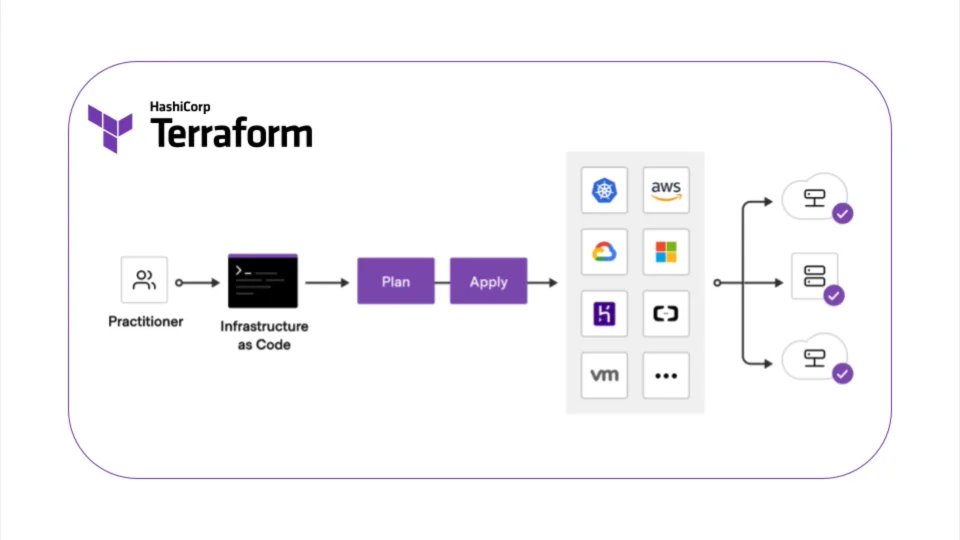
By using Terraform OCI automation, organizations can define and manage their cloud infrastructure using declarative configuration files, ensuring consistency across environments.
Infrastructure as Code (IaC) Explained
What Is Infrastructure as Code?
Infrastructure as Code (IaC) allows teams to manage infrastructure through code rather than manual processes.
With Infrastructure as Code for Oracle Cloud, Terraform enables:
- Version-controlled infrastructure
- Automated OCI provisioning automation
- Repeatable and auditable deployments
- Faster environment creation
This approach aligns with cloud automation best practices and modern DevOps workflows.
How Terraform Works with Oracle Cloud Infrastructure
Terraform integrates seamlessly with Oracle Cloud Infrastructure (OCI) using the Terraform OCI provider.
Key Components
- Terraform providers to interact with OCI APIs
- Terraform configuration files written in HCL
- Terraform modules for reusable infrastructure code
- Terraform state file to track deployed resources
Using these components, teams can automate OCI resources automation such as compute instances, networking, storage, and databases.
Benefits of Using Terraform with OCI
Terraform Benefits for OCI
Terraform offers multiple advantages over traditional provisioning methods.
Key Benefits Include:
- Consistency: Same configuration across dev, test, and production
- Speed: Rapid deployment of OCI resources
- Scalability: Easily manage large enterprise environments
- Cost control: Avoid over-provisioning
- Multi-cloud readiness: Supports future expansion
These benefits make Terraform for enterprise Oracle Cloud automation a preferred choice for organizations.
Terraform vs Manual OCI Provisioning
Why Terraform Is Better
When comparing Terraform vs manual OCI provisioning, automation clearly wins.
| Manual Provisioning | Terraform Automation |
|---|---|
| Error-prone | Declarative & consistent |
| Time-consuming | Fast & repeatable |
| Hard to scale | Scales easily |
| No version control | Full version control |
Terraform also integrates well with Oracle Cloud automation tools, enhancing operational efficiency.
Enterprise Use Cases of Terraform in Oracle Cloud
Terraform Use Cases in Oracle Cloud
Terraform is widely used across industries for enterprise-grade automation.
Common Use Cases:
- Automated OCI environment setup
- Network and security provisioning
- Database and compute deployment
- Terraform with OCI Resource Manager integration
- Terraform for hybrid cloud automation
- Terraform multi-cloud strategy implementation
These use cases demonstrate how Terraform simplifies complex Oracle Cloud deployments.
Terraform Modules & State Management
Reusable & Controlled Infrastructure
Terraform modules help standardize infrastructure patterns across teams.
State Management Benefits:
- Tracks real-time infrastructure state
- Enables safe updates and rollbacks
- Prevents configuration drift
Proper Terraform state file management is critical for secure and reliable automation.
Security & Compliance in Terraform Automation
Terraform Security Best Practices
Security is a major concern in enterprise environments.
Best Practices Include:
- Secure state file storage
- Role-based access control
- Policy-based resource creation
- Integration with Terraform with CI/CD pipelines
This ensures secure Terraform automation for enterprise cloud environments.
Is Terraform Worth Learning for Oracle Cloud Engineers?
Career & Training Benefits
As cloud adoption grows, professionals skilled in Terraform automation for OCI resources are in high demand.
Why Learn Terraform in 2025?
- Strong demand in DevOps and cloud roles
- High relevance in enterprise cloud projects
- Works across multiple cloud platforms
Enrolling in Terraform online training or a Terraform OCI training institute with hands-on labs and real-time projects significantly boosts career prospects.
Frequently Asked Questions (FAQs)
What is Terraform?
Terraform is an Infrastructure as Code tool used to automate cloud infrastructure.
Can Terraform automate OCI completely?
Yes, Terraform can automate most OCI resources efficiently.
Is Terraform better than OCI Resource Manager?
Terraform offers more flexibility, multi-cloud support, and advanced automation features.
Conclusion
In today’s automation-driven cloud landscape, Terraform has become a powerful tool for Oracle Cloud automation. By enabling Infrastructure as Code, reducing manual effort, and supporting enterprise-scale deployments, Terraform simplifies how organizations manage OCI environments. For enterprises and professionals alike, learning Terraform for Oracle Cloud Infrastructure is a future-proof investment.